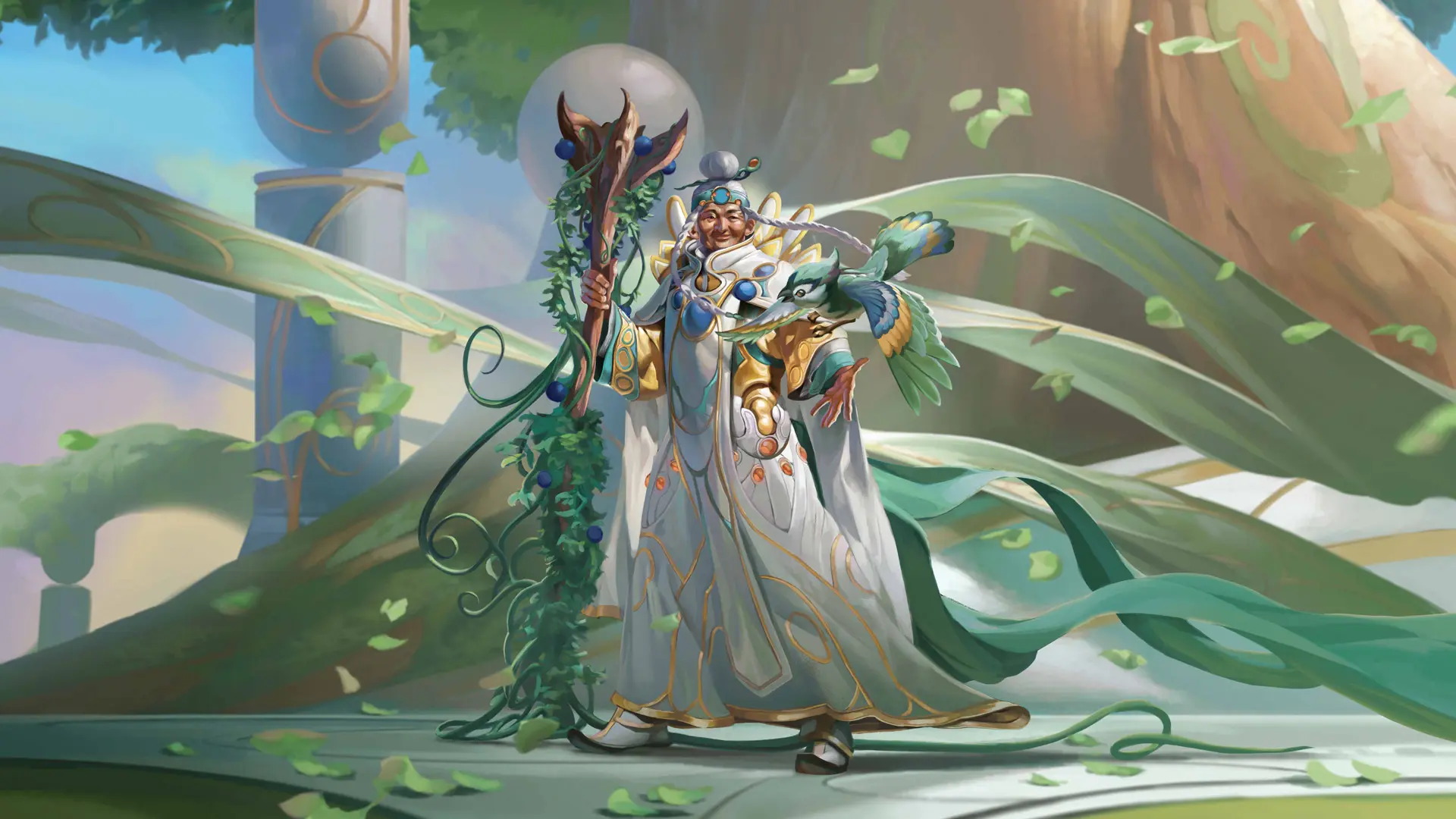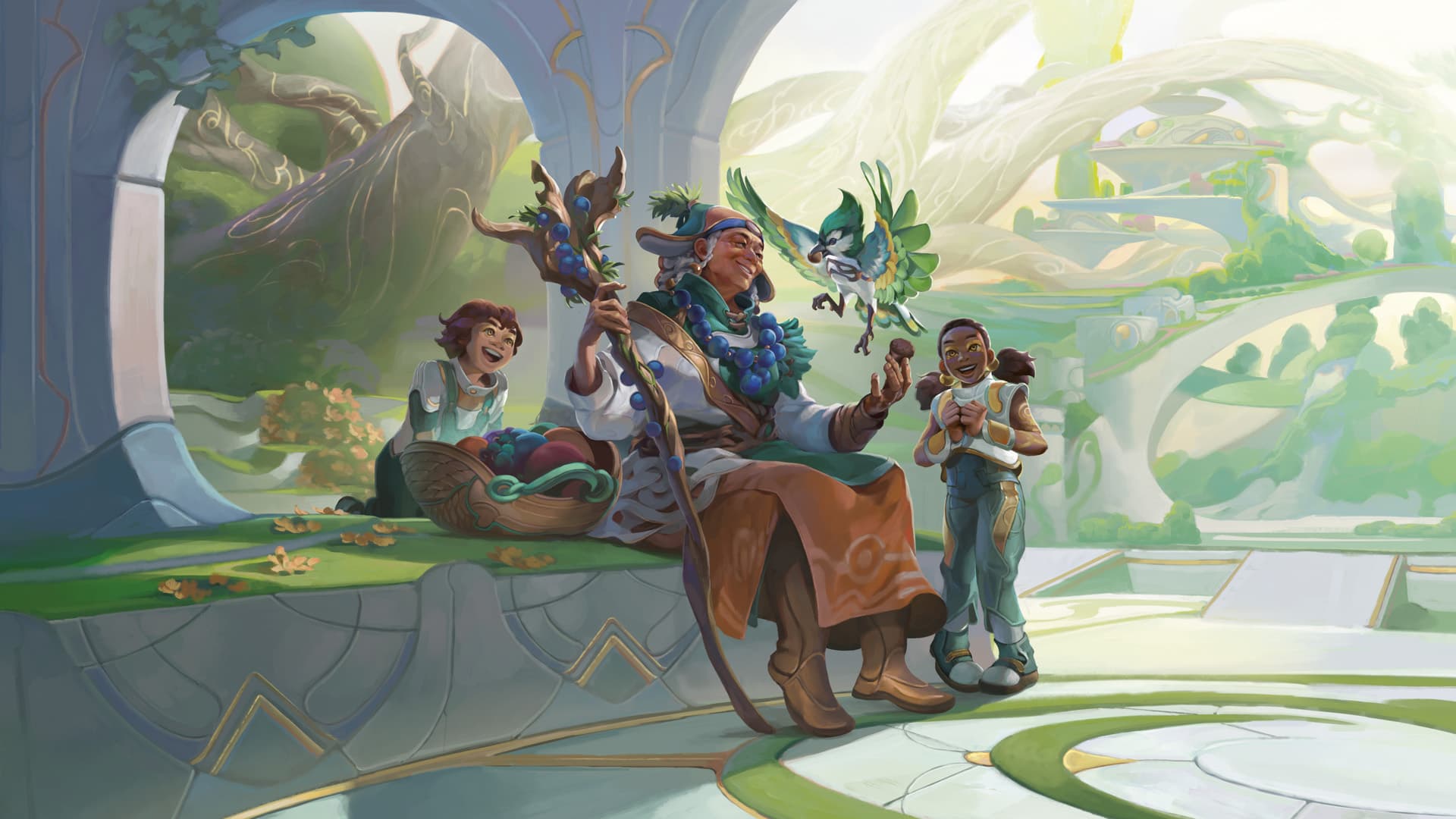
Turuun & Benih

5 minutes
She sometimes thinks back to Amorgand—its milky waters, the lotus flowers budding across their surface when molting season comes… She used to wake to the sound of sails snapping above her skiff. They no longer served any purpose, of course. The schooner had been raised up onto a pier. But the sails still billowed at the slightest breeze, like white and pink magnolia petals.
At dawn, merchants, fishermen, and strollers would leave offerings along the jetty, and Turuun took particular care to wrap them in bamboo leaves. Then she set them upon broad lily pads and watched them drift toward the shore, toward the sanctuary over which she kept vigil. Over which another Muna now kept watch.
There was, in that peaceful existence, a gentle lethargy ringed with mist. She might have remained there until the end of her days. Her skin was already wrinkled and her hands knotted when Rin came to find her. She had resolved to make no more waves, mirroring the lake’s languid waters. But that encounter stirred her from her torpor. Rin was a joyful, curious child, and of course Turuun grew fond of the girl, scatterbrained and fanciful as she was. Even so, it was the Chimera who ultimately persuaded her to take up her walking staff again, aching joints and diminished resilience be damned. Turuun told her about the Musubi. She had hesitated for a long time before doing so. Then, once the words began to flow, she could not stop. It was like a dam finally giving way. There was no holding back the flood.
So many memories, and so many regrets. So many betrayed hopes. She no longer remembered exactly when Parisa had arrived at the Bark Refuge. They were roughly the same age, but what was certain was that Parisa’s talent and knowledge far surpassed her own. More than anything, though, it was her dream that had shocked her. She found it so ambitious, so radical. And at the same time, the mere suggestion of it was outrageous and dizzying: to reproduce the bond between Kaibara and Niavhe, to rekindle the spark that had given birth to the Muna… The Elders had already noticed the signs, though they preferred not to speak of them—except in hushed tones during their assemblies. They likely hoped the trend would reverse itself.
Year after year, fewer and fewer children were born with a gift, or even with the perception of the Skein. It was not a sudden collapse—far from it—but a slow erosion. Like descending the gentle slope of a hill. Some suggested it was linked to the Spindle’s disease. Others blamed the Peninsula’s growing industrialization. But for Parisa, the answer lay in reviving the primordial spark that had brought forth the Faction. Like Turuun, Parisa was a mature woman, and though no one truly knew where she came from—rumors spoke of distant Suspira, or even Caecaster—it was clear she possessed vast experience with living things. ‘Life will always find a way to blossom,’ she often said.
Turuun still does not know what convinced her to help. Perhaps it was simply the friendship budding between them. Or perhaps the deeply narcissistic desire to leave her mark on History. The early stages were arduous, to say the least. The union of Niavhe and Kaibara was, at best, legend, and they had nothing but instinct and intuition to guide them. Only after long months of frustration and failure did Turuun discover that Parisa, without informing her, had begun vile experiments. Through successive hybridizations, she created new strains of Nifir, less virulent, and used them to fashion composite life forms—chimeric associations. Turuun was sickened at the sight of what amounted to a cabinet of horrors, beings against nature that should never have seen the light of day. But Parisa merely shook her head. To her, mythological creatures were, by definition, the result of such crossings, such interminglings.
Turuun let herself be persuaded, though she carried a knot in her stomach. Parisa had used the Skein to graft living beings onto one another. But what she was truly attempting was to bind two souls without merging their consciousnesses. Increasingly, Parisa believed that the union of Niavhe and Kaibara was not the source of the Muna’s creation, but an epiphenomenon—a byproduct. The bond between the girl and the Leviathan was not mystical, but manufactured. Its origin was undeniably artificial, born of deliberate will. And all those reprehensible tests had been meant to prove it.
They might have searched their entire lives without finding the answer, had it not been for Avkan’s unexpected arrival. He was still a young man at the time, before he was elected Basileus. He belonged to no Faction, and perhaps that was why his hypothesis came so readily. There was another way to connect two beings besides the Skein—a process the Ordis had mastered for centuries. He was referring, of course, to the Gestalt, and to the fact that through the filter of Coalescence, unity could be generated while preserving individuality. Armed with that realization, the two Muna managed to simulate such a bond, replicating the desired effects rather than regenerating them.
The rest is known to all. The Musubi was revealed to the world, and the ritual shared with other Muna. Nearly ten years after their breakthrough, it was performed “for the first time” between an Alterer and a Chimera. But even then, Turuun felt their discovery slipping from their grasp. It had been politicized, diverted from its original purpose to serve a cause. Worse still, she increasingly felt that something was wrong—that she had been used to achieve that result. Had she been manipulated? What about Parisa? And when Bai Shan-shu and Zephyr claimed to bind themselves in a parody of a ceremony, it became crystal clear to her that it was all a sham. They were already an Exalt when they presented themselves at the Bark Refuge, even if it was an imperfect, rudimentary form.
For all these reasons, Turuun left Kirighai and settled as far away as possible, in the Nutsuwa Highlands. That voluntary exile, and the many years that followed, were necessary to recover a semblance of serenity. She never saw Parisa again. And when Rin appeared on her doorstep, it was as though fate had come knocking once more. This time, she felt ready to face her past and assume her share of responsibility, to cast aside old demons. She trained many Exalts and forged a bond with her own Alter Ego. Through it, she experienced what she had always brushed against without daring to immerse herself. And through that bond—through Benih’s presence within her soul—she finally made peace with herself.
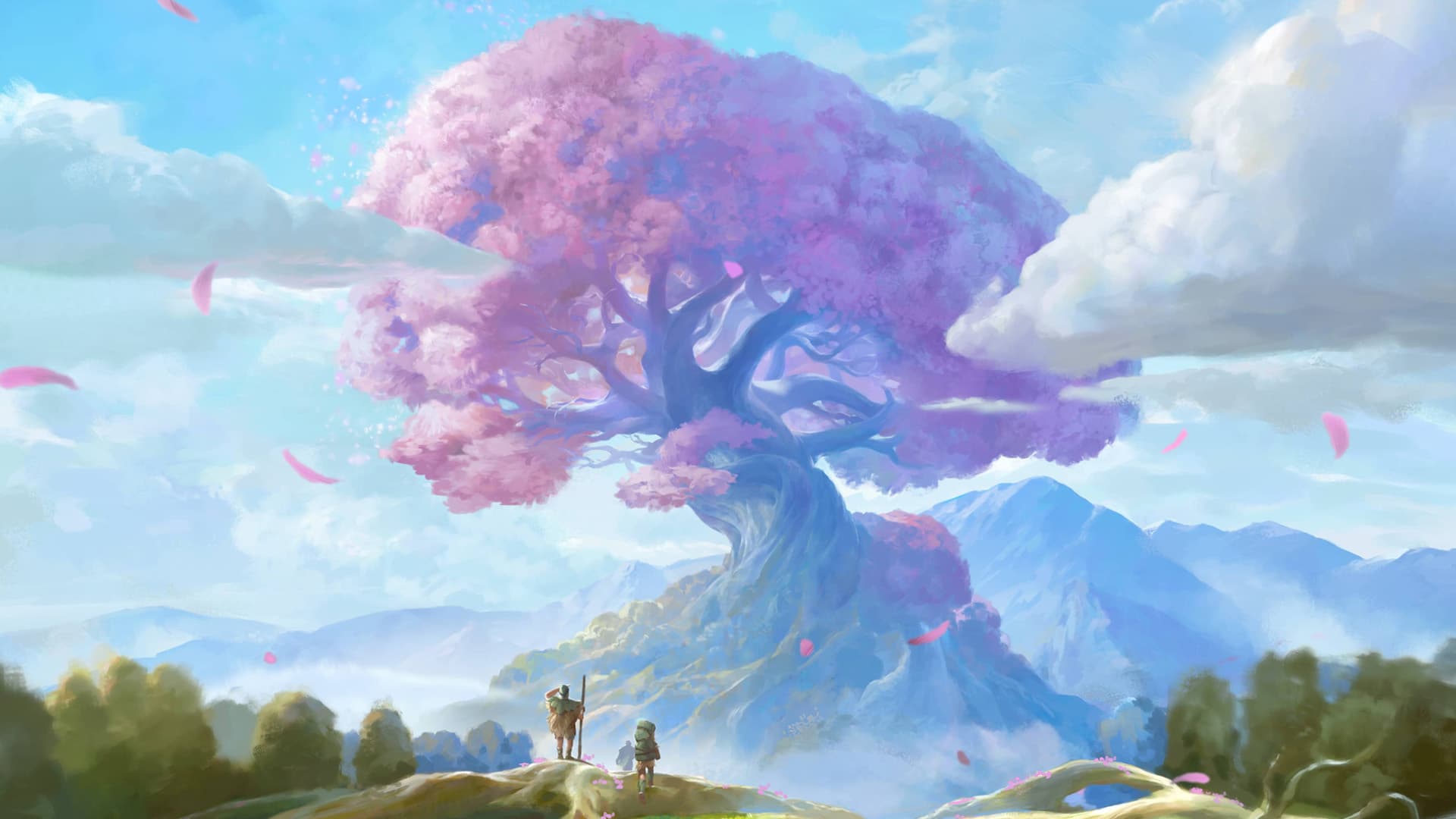
When Arjun Chainani’s message arrived, requesting that a Spindle fruit be delivered to the Expeditionary Corps, she asked to join the journey, knowing full well it would be her last. They had found another world-tree, they said, also sterile, like the Spindle. Muna and Axiom botanists wanted to try crossing their fruits, perhaps—who knows—producing a fertile specimen. Once again, hybridization. The idea seemed to have stamped her life with its seal. In truth, she could not clearly say whether the desire was her own, or Benih’s migratory instinct, or her natural inclination to return to the Tumult. When she took stock, the reasons were many: to watch over Rin, to reconnect with her former self—disillusionments and resentments be damned—and perhaps most of all, to witness with her own eyes the adventure she had helped set in motion so very long ago.