Matz & Hive

5 minutes
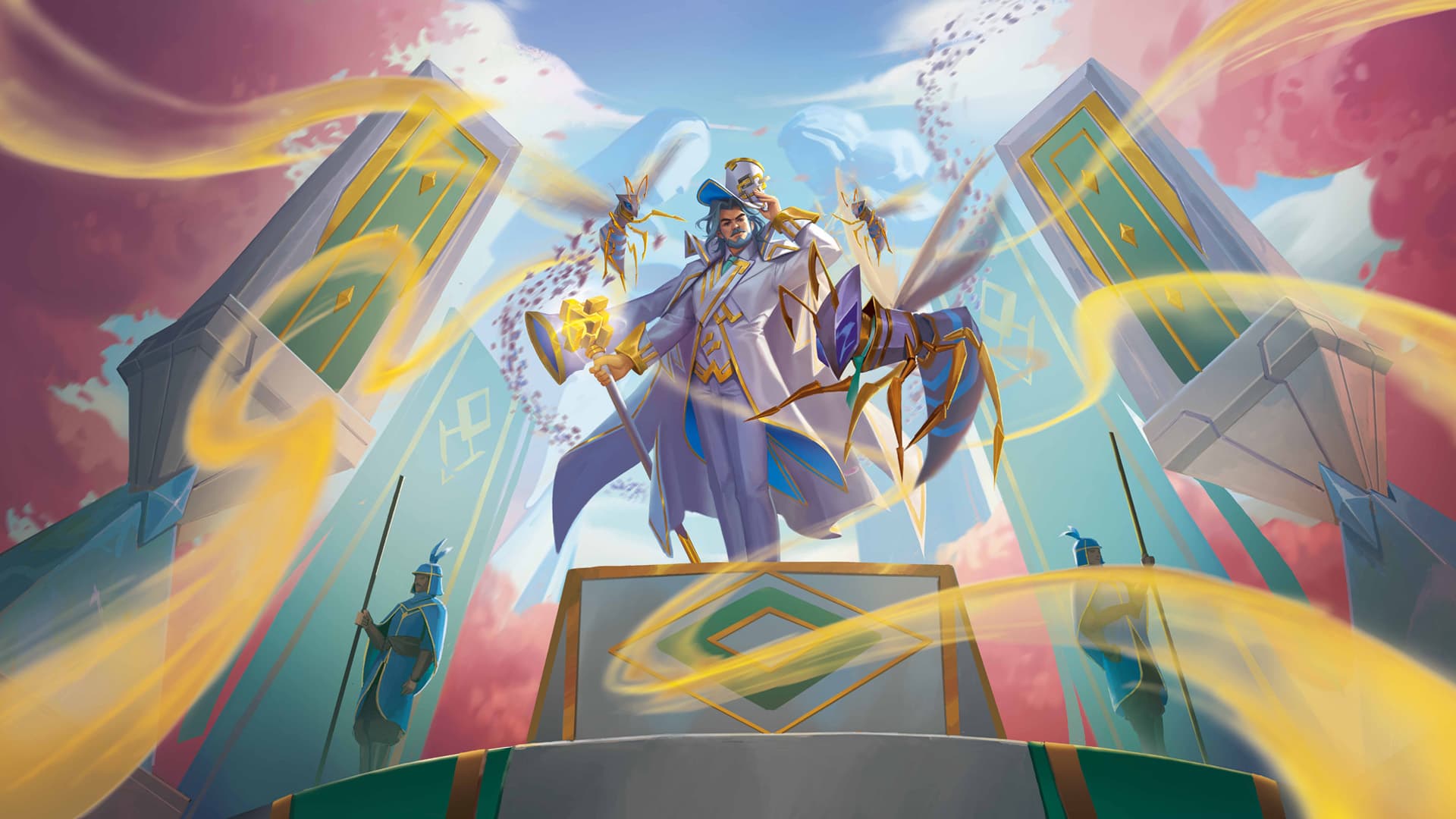
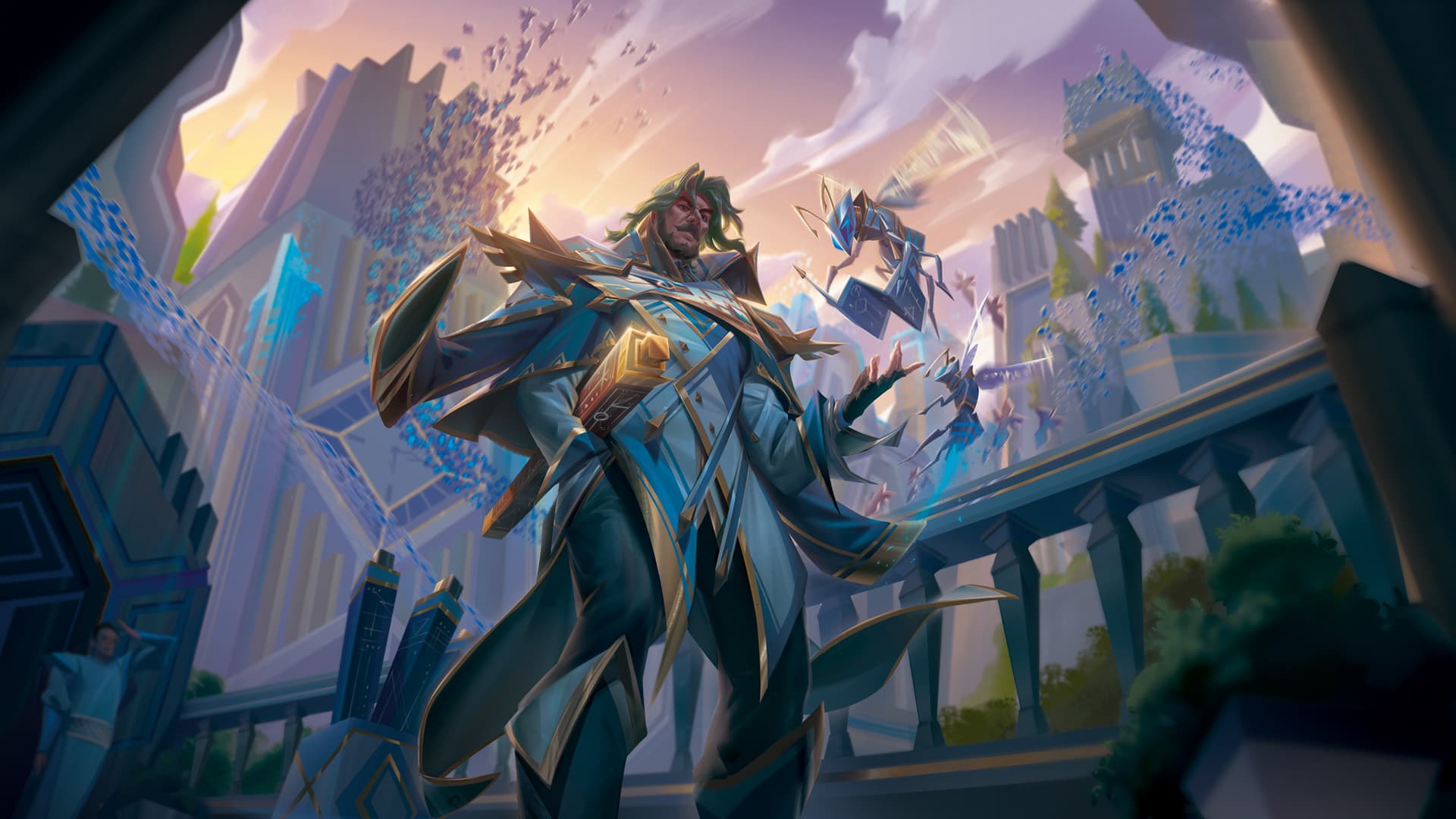
A wasp lands on his hand, its abdomen twitching, and he simply watches it without fear of being stung. For this swarm has no queen, but a king. Across from him, on the circular esplanade, the workers are putting the finishing touches on the scaffolding under the calculating, concerned gaze of his Reka counterpart. Corinna and he work in much the same way. Matz need only envision a shape, and his wasps coordinate and set to work, as if instinct itself dictates what they must build; she, for her part, codes a program that the Reka nanites execute without hesitation, shaping and reshaping the Sap as though it were clay. No, it is more in temperament that they differ: she, overly conscientious; he, faintly phlegmatic.
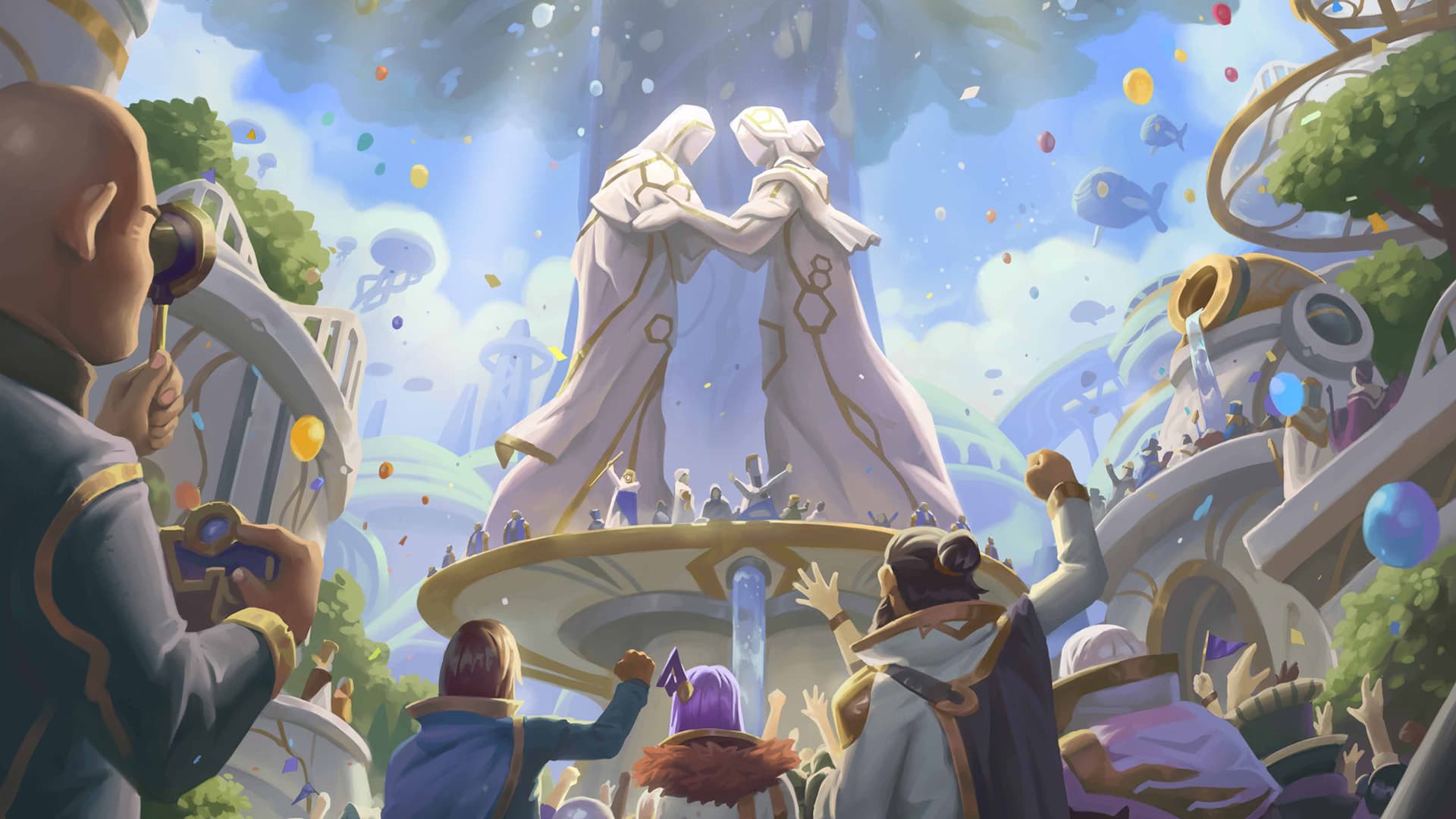
Yet both are at once architects, sculptors, and masons. And even if their philosophies are radically different, the outcome must be the same. The very nature of the work requires that each of them make concessions, difficult though they may be. The monumental statue commissioned jointly from them is profoundly symbolic. That is, in fact, its primary function: to vividly illustrate the reunion of two peoples cruelly isolated by the twists and turns of History—sister civilizations that grew in parallel after being separated at birth. They hesitated at length over several possible names: "The Sisters’ Embrace"—too metaphorical; "The Meeting"—and why not "The Symposium", while they were at it? In the end, "The Reunion", neither too pompous nor too plain, proved a fitting compromise.
That was the greatest difference between them. He does not consider himself an artist in the slightest. He has never harbored such pretensions. In fact, he believes quibbling over such trivialities is a waste of time and energy. In any case, he cannot afford it. Corinna, by contrast, experiences this appointment as a consecration, an achievement, an unexpected opportunity, and her work must rise to the honor bestowed upon her. Unlike Matz, who could not care less. His magnum opus lies behind him, even if no one will ever know it, and the laurels he reaped were more curse than reward. No, he has no interest in art. He has no interest in esteem, glory, or distinctions.
Few know what the Gestalt truly is, or why it was first shaped. They do not need to. For many, it is simply a Rhombus one inscribes, which opens the mind to those of others, like a vast shared network. Which it is. In part. But the original ambition was quite different. It was the result of an experiment conducted when the Ordis and the Yzmir worked hand in hand, driven by Aysun and Caellach. Glyphs and Seals were not so far apart, at heart. They shared the same root. They were born of the desire to tame ideas. They served as source code for what would much later become the limits of the Gestalt. In those days, the boundaries between the Factions were far more porous, their hierarchies far less defined or exclusive.
From what he understands, those experiments targeted the Veil, with the aim of reinforcing it and preventing the advent of a second Confluence. Of course, it could have gone wrong. That is often what happens when one meddles with forces beyond comprehension. But by manipulating its texture and topography, the Alterers managed to create isolated pockets of the Empyrean—buffer zones of a sort: one for the Ordis, another for the Yzmir. He has no idea what the Mages did with theirs, but for the Ordis… for the Ordis, that cradle would soon become the seat of their greatest power, to the point that the Faction itself was forced to restrict it rather than expand it.
Every void yearns to be filled. Isn’t that what they say? Matz suspects the Ordis initially sought to shape a shared consciousness by diverting the existing bond between humanity and the realm of imagination. Instead of crossing the Veil, imagination was redirected into that bubble to nourish it, to strengthen it. With such an amalgamated psyche, Alteration might have performed miracles, capable of rewriting the very fabric of reality. But something must have gone wrong, and the project was abandoned—or so he inferred, given the scale of the countermeasures put in place to curb such excesses. And as chief architect of the Gestalt, tasked with maintaining its infrastructure and updating it when necessary, he had a front-row seat to its secrets.
There was no shortage of work: cataloging its flaws and vulnerabilities, evolving its encryption, preventing data leaks—intentional or otherwise—optimizing traffic and processing capacity… He frequently ran penetration tests, ensured the impermeability and inviolability of the shells, verified proper privilege assignments, and monitored the smooth circulation of datagrams and other packets. He would still be doing so if events had unfolded differently; if he had not sinned through pride, if he had kept his tongue, if he had not yielded to curiosity, if he had taken a day off that day… In the end, that is a great many "ifs".
He was alerted by signals from the Aegis troops but initially contented himself with monitoring the situation. Only once the nature of the threat was confirmed did he take a closer interest. Muna druids had discovered, nestled in the southern bayous of the Ifu Cove, a gigantic hive of chimeric origin. The wasps were attacking the local wildlife, and the forces on site were unable to curb its expansion. Killing individual members of the swarm proved useless, for each insect was merely an extension of a hidden, inaccessible hive-mind. Matz volunteered to infiltrate the collective intelligence. Accompanied by soldiers assigned to protect him, he ventured into the marshlands in search of the swarm’s heart.
Within his mind, he summoned a secure domain, carefully isolating it from the rest of the Gestalt. Then, after capturing a specimen, he inscribed a Rhombus upon the wasp in order to locate the swarm’s queen and hack her from within. But she was the one who entered his mind. The battle raged—two consciousnesses struggling for supremacy. Matz severed all connection to the Gestalt to isolate the Chimera’s mind, to safeguard the integrity of the mental edifice and prevent contamination of the other Ordis. He deployed an entire array of protocols and, in a final effort—while an Ollam unknowingly celebrated the Musubi—he succeeded in containing and circumventing the threat. The wasps ceased their attacks. Better still, he had taken the queen’s place at the summit of their social hierarchy.
But the victory left a bitter taste. Matz was forever cast out from the Gestalt, cut off from all contact with the minds of his peers. His body had become a prison for his soul, and his mind a cell for an enraged, malevolent Chimera. So yes, by force of circumstance, the wasps had become extensions of himself. Through them, he reinvented himself as a builder, simply capitalizing on their faculties. There was something ironic in that. He had grown accustomed to their presence, to the constant, droning buzz of their wings. Yet even now, he feels no affection for them. He merely exploits them as tools. They are the reflection of his condition and of the sacrifices he has had to make. Are there other Exalts at the mercy of such antagonism?
No, probably not. All the others seem to get along splendidly. He alone experiences this bond as torment. Each day, he can still feel the parasitic consciousness pounding against the bars of its cage. Constantly, it seeks to reclaim control. At every moment, it probes his mind for weaknesses. If he is not vigilant, perhaps it will succeed. Nearly all his energy is devoted to keeping it from escaping. So to hell with esteem, glory, or distinctions. He knows full well that before he is an architect, sculptor, or mason, he is first and foremost a jailer. And that his true great work is, in the end, a prison.